
What is Chrysoprase? The Apple-Green Quartz Gemstone
What is Chrysoprase?
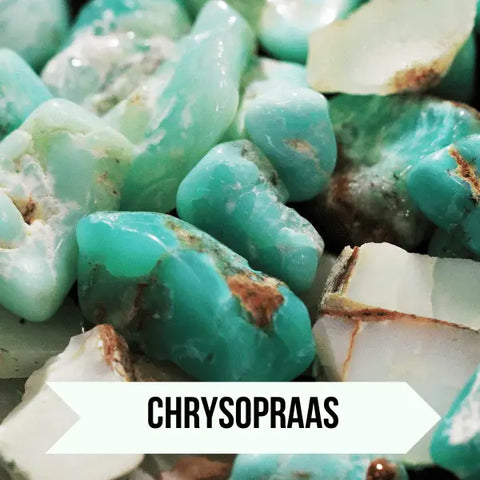
Chrysoprase is a beautiful gemstone belonging to the quartz family, known for its enchanting green hues—from apple green to deep emerald green. Its vibrant color is caused by traces of nickel oxide and is associated with the freshness of spring and new beginnings. Chrysoprase scores 6.5 to 7 on the Mohs scale and is one of the most highly valued green gemstones in the quartz family. Check out our crystal jewelry collection for unique gemstones.
History and Origin of Chrysoprase
The name chrysoprase comes from the Greek words chrysos (gold) and prason (leek), referring to its golden-green color. Chrysoprase was already prized in ancient times—Alexander the Great is said to have worn the stone as a talisman. In the Middle Ages, chrysoprase was used in religious artworks and royal jewelry. Important deposits are found in Australia (the largest producer), Brazil, Russia, and Poland.
Characteristics of Chrysoprase
Color—from light apple green to deep emerald green, caused by traces of nickel oxide. The more intense the green color, the more valuable the stone. Hardness—6.5 to 7 on the Mohs scale: durable for daily wear. Transparency—semi-transparent to translucent with a waxy to vitreous luster. Note: Prolonged exposure to direct sunlight can cause chrysoprase to fade—store in a dark, dry place.
Use of Chrysoprase in Jewelry
Chrysoprase is incorporated into both modern and traditional jewelry designs, with the stone's natural beauty taking center stage. It is cut as a cabochon to highlight its waxy luster, or in faceted forms for extra sparkle. Popular applications include rings, pendants, and boho jewelry, where the green color combines beautifully with gold or silver.
Spiritual Meaning of Chrysoprase
Chrysoprase is associated with harmony, balance, and new beginnings. The stone is known for its ability to attract positive energy and promote emotional healing. Chrysoprase is connected to the heart chakra and is used to stimulate love, compassion, and inner peace. It is also seen as a stone of hope and optimism.
Frequently Asked Questions About Chrysoprase
- Is chrysoprase suitable for daily wear?
- Yes, with a hardness of 6.5 to 7 on the Mohs scale, chrysoprase is durable enough for daily wear. Avoid hard knocks and store separately from harder stones to prevent scratches.
- Does chrysoprase change color in the sun?
- Yes, prolonged exposure to direct sunlight can cause chrysoprase to fade. Store jewelry in a dark, dry place when not being worn.
- How do I care for chrysoprase jewelry?
- Clean gently with a soft cloth and lukewarm water. Avoid contact with harsh chemicals and abrasive cleaners. Store separately in a soft pouch to prevent scratches.
- What is the difference between chrysoprase and emerald?
- Both are green gemstones but are chemically different. Chrysoprase is a variety of quartz (nickel oxide gives it its green color); emerald is a beryl gemstone (chromium and vanadium give it its green color). Emerald is rarer and more expensive; chrysoprase offers an affordable alternative with a similar green appearance. Learn more on our aventurine encyclopedia page for another green quartz stone.
- What are the spiritual properties of chrysoprase?
- Chrysoprase is associated with harmony, balance, and new beginnings. It is connected to the heart chakra and is used to attract positive energy, promote emotional healing, and stimulate love and compassion.