
What is a King's Chain? The Byzantine Chain
What is a Byzantine chain?
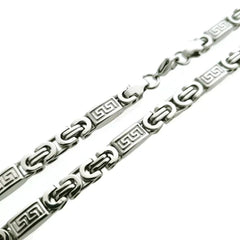
A Byzantine chain — also known as a King's chain or Fool's braid — is a classic and opulent link chain with its origins in the Byzantine Empire. The chain is characterized by a complex design of oval links artfully interwoven, resulting in a sturdy yet flexible chain with a striking, three-dimensional structure. The Byzantine chain exudes timeless elegance and royal allure. View our necklace collection for all link styles.
History of the Byzantine Chain
The Byzantine chain originated in the Byzantine Empire (c. 330–1453 AD), where this jewelry style first appeared and quickly conquered royal courts and nobility. The chain owes its name to its royal appearance and the craftsmanship required to create its complex link structure. From Byzantium, the style spread throughout Europe and the Middle East, where it became a symbol of power, wealth, and sophistication. Today, the Byzantine chain is a timeless classic in the jewelry world.
Characteristics of the Byzantine Chain
The Byzantine chain is known for its detailed and refined design. The oval links are intricately interwoven — each link is braided through two other links — creating a sturdy yet flexible chain that dlays perfectly around the neck. The three-dimensional structure gives the chain a rich, full appearance that stands out in the light. Byzantine chains are available in gold-colored and silver-colored stainless steel, and in various thicknesses and lengths.
How to Wear a Byzantine Chain?
A Byzantine chain is versatile — suitable for both formal occasions and everyday wear. Wear it solo as a statement piece, or combine it with other necklaces for a layered look. The chain pairs well with both casual and dressed-up outfits. Combine with matching earrings in the same metal color for a cohesive look.
Maintenance of a Byzantine Chain
Store the chain separately from other jewelry to prevent scratches. Clean regularly with a soft cloth to remove dirt and dust. Avoid contact with hard surfaces to prevent deformation of the links. Avoid contact with perfume, chlorine, and harsh chemicals. If in doubt about cleaning, consult a professional jeweler.
Frequently Asked Questions about the Byzantine Chain
- What is the difference between a Byzantine chain and a regular link chain?
- A Byzantine chain has a complex, three-dimensional structure with oval links intricately interwoven. A regular link chain has a simpler, flat structure. As a result, the Byzantine chain has a richer, fuller appearance.
- Why is it called a Byzantine chain?
- The name refers to the royal origin and appearance of the chain. The style originated in the Byzantine Empire and was popular with kings, emperors, and nobility. The complex weaving technique and rich appearance gave the chain its royal name.
- Is a Byzantine chain suitable for everyday wear?
- Yes, stainless steel Byzantine chains are durable and resistant to daily wear. The sturdy link structure makes the chain strong and less susceptible to breakage than finer chain styles.
- In what materials is a Byzantine chain available?
- Byzantine chains are available in gold-colored and silver-colored stainless steel — durable, colorfast, and affordable. Byzantine chains are also available in 925 silver and gold for a premium look.
- How do I combine a Byzantine chain with other jewelry?
- Wear a Byzantine chain solo as a statement piece, or combine it with a finer chain for a layered look. Maintain the same metal color for cohesion. Combine with matching earrings or a bracelet for a complete look.